HCIstudio
Research Group

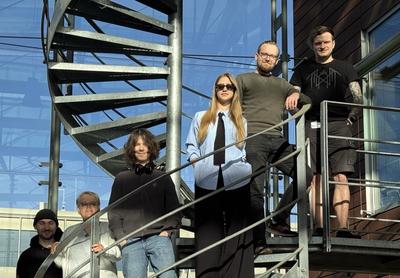
Welcome to the HCIstudio research group at the Humboldt University of Berlin. Our passion for Human-Computer Interaction (HCI) research drives us to shape the future of how people interact with technology. Our team pioneers advancements in interactive artificial intelligence, adaptive user interfaces, physiological interaction, extended reality, and HCI research methods.
Recent Publications

Open access and supplementary material to all of our conference and journal papers

Can AI Route You to Happiness? A Technical Study on Affective Automotive Navigation Interfaces

Conventional navigation systems, fixated on metrics such as time and distance, neglect the driver’s emotional well-being, despite driving routes being inherent emotional triggers. This raises a critical question for the Intelligent User Interface community: How can intelligent systems successfully route information based on This work is licensed under a Creative Commons Attribution 4.0 International License. IUI ’26, Paphos, Cyprus © 2026 Copyright held by the owner/author(s). ACM ISBN 979-8-4007-1984-4/26/03 https://doi.org/10.1145/3742413.3789158 emotion? To address this gap, we introduce HappyRouting, an empathic car interface designed as an initial attempt to guide drivers through real-world traffic while actively optimizing for positive emotional states. Our core technical contribution is a machine learning-based emotion map layer that predicts the affective valence along various routes using both static and dynamic contextual data. HappyRouting enables the generation of “happy routes” integrated into a functional vehicular interface prototype. We explored the efficacy of this approach in a preliminary, small-scale driving study (𝑁 = 13). Our initial findings provide provocative evidence: Emotion-optimized routes successfully increased the subjectively perceived valence by 11% (𝑝 = .007) compared to standard routes. IUI ’26, March 23–26, 2026, Paphos, Cyprus Bethge et al. Furthermore, despite taking 1.25 times longer on average, participants consistently perceived the travel duration as shorter. This result suggests that integrating emotional optimization could fundamentally challenge the speed-first paradigm. However, recognizing the constraints of our initial, limited sample, we conclude by discussing ethical and computational challenges that must be resolved before emotion-based routing can be safely and scalably integrated into next-generation intelligent navigation apps.

Making Complex Workflows Tangible: Investigating Immersive Analytics Approaches for Data Analysis Workflows

Data Analysis Workflows (DAWs) are central to modern scientific research, yet their growing complexity presents significant usability challenges. Traditional desktop-based visualizations often lack the spatial and interactive affordances needed to support intuitive understanding and engagement. This study investigates the potential of Immersive Analytics (IA) to improve the visualization and interaction with DAWs. We developed two IA prototypes and tested them in a within-subject user study (N=18), collecting qualitative feedback and evaluating it through a systematic approach. Participants generally found the immersive environments intuitive and enjoyable, highlighting IA’s potential to support complex workflow interpretation and communication. At the same time, they noted several limitations, ranging from difficulties in navigation to occasional information overload. These findings emphasize both the This work is licensed under a Creative Commons Attribution 4.0 International License. PerDis ’26, Munich, Germany © 2026 Copyright held by the owner/author(s). ACM ISBN 979-8-4007-2513-5/26/03 https://doi.org/10.1145/3797993.3798015 promise and the challenges of using IA for DAWs. Together, these insights inform future work on developing mature IA tools capable of supporting diverse scientific practices.